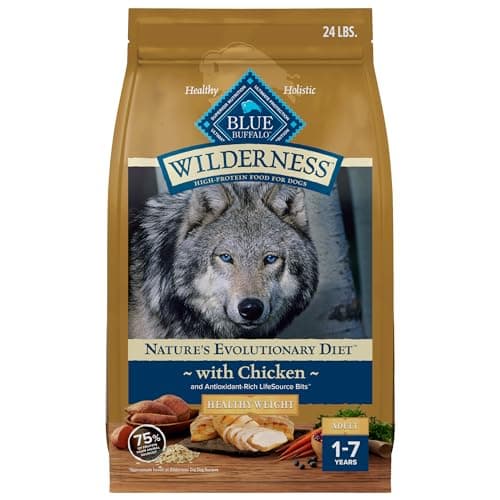
The single most important thing you can do for your Lab's joint health is keep them at a 4/9 body condition score. Every pound above ideal adds roughly 4 pounds of force to the hip joints at a trot. A Lab at 85 lb when their ideal is 75 lb is carrying the equivalent of a 40-lb backpack on their hips every step. This matters more than any supplement, any formula, any therapeutic intervention. If you do nothing else, weigh your dog monthly and adjust portions to maintain ideal body condition.
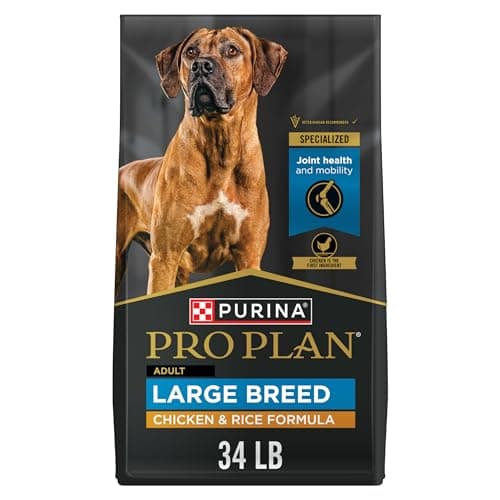
Feed based on body condition, not the bag's feeding chart. Bag charts are calibrated for intact, active dogs in cool climates. A neutered adult Lab living an indoor lifestyle typically needs 25–35% fewer calories than the chart suggests. Start 25% below the chart, weigh weekly, and adjust. Expect to land between 1,300–1,500 kcal/day for a typical 70–80 lb neutered adult — that's roughly 3.5 cups of a 372 kcal/cup formula like Purina Pro Plan Large Breed.
Use a slow-feeder bowl. Labs eat fast, and eating fast contributes to bloat (gastric dilatation-volvulus), a life-threatening emergency this breed is predisposed to. A slow-feeder bowl extends mealtime from 45 seconds to 3–4 minutes, which is enough to significantly reduce air swallowing. We recommend the Outward Hound Fun Feeder or a Gobble Stopper insert for a regular bowl — both are under $20 and pay for themselves in vet bills avoided.
Split daily portions into two meals. Feeding once a day increases bloat risk and creates hunger-driven behavior problems (counter-surfing, trash-raiding). Two meals 10–12 hours apart keep the dog satisfied and reduce the volume of food in the stomach at any one time. For a Lab eating 3.5 cups/day, that's 1.75 cups morning and 1.75 cups evening — easy to measure and consistent.
Add a fish oil supplement if your formula's omega-3 is low. For Labs with existing joint disease, the therapeutic dose of EPA+DHA is 50–100 mg per kg of body weight per day. A 75-lb Lab (34 kg) needs 1,700–3,400 mg daily. If your formula has 0.4% omega-3 (about 60 mg per cup), 3.5 cups delivers only 210 mg — far below therapeutic. Adding a high-quality fish oil capsule (like Grizzly Omega Health) bridges the gap. Look for oils that list EPA and DHA separately, not just 'total omega-3', since ALA from plant sources doesn't convert efficiently in dogs.